Articles Posted in Real Estate Transactions and Finance

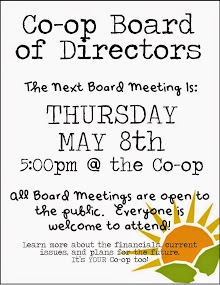
coop board meeting.jpgIn a prior blog post , we described how annual cooperative shareholder meetings should be conducted. Now that the cooperative’s Board of Directors is properly elected and in place, the business of the cooperative should begin with the holding of a meeting of the Board and electing officers. This blog post will describe how to conduct regular Board of Director meetings in a cooperative.

It is not unusual for By-Laws to require a newly elected Board to meet immediately after the annual shareholders meeting, even if such a meeting has not been noticed. Otherwise, By-Laws may require advance notice of the Board meeting. While Board meeting notices usually do not need to specify an agenda, we recommend that an agenda be circulated prior to the meeting so that those in attendance are prepared for the discussion of cooperative business and are not surprised by any of the topics.

At the first Board meeting, it is prudent to elect the officers, such as the President, Vice-President, Secretary and Treasurer. The By-Laws will identify those officers to be elected for a particular cooperative as well as their roles. Review of the By-Laws must be made to confirm the quorum (the minimum number required to hold a valid meeting) required for the Board meeting, whether a majority or other percentage of directors. Once it is determined that there is a quorum present at the Board meeting, the By-Laws should be consulted to note voting requirements. Does a mere majority vote or a higher percentage allow for the passage of resolutions discussed? Particular matters, such as enacting additional fees like a flip tax, may require a vote of more than a majority, such as two-thirds. A flip tax is a fee paid to the cooperative at a closing by the seller and may be calculated as a flat amount, a percentage of the sales price, a percentage of the net profit of the sale, or by assigning a particular number of dollars per share owned by the seller. A flip tax is intended to enhance the account balance of the cooperative and share some of the seller’s sales proceeds with the building. Since flip taxes comprise an additional fee, it is not unusual for voting to require more than a majority or for such a matter to be considered by all shareholders, instead of merely the Board.

beachhouse.jpgMemorial Day weekend is eagerly anticipated by many of our readers, especially this year after the harsh winter that we endured. Fortunate travelers expect to enjoy their vacation homes this weekend. As you head out for the weekend, we wish to remind you of certain legal issues pertaining to vacation homes.

Some vacation homes were financed by the use of reverse mortgages . Once the borrower dies or does not occupy the home for another reason, the lender may seek to collect the remaining unpaid principal balance, require the home to be sold or foreclose on the property. Since vacation homes are secondary homes, obtaining a mortgage modification, if necessary due to the financial circumstances of the borrower, is not a certainty. We are available to assist our clients in foreclosure defense should it become necessary.

Sometimes a vacation home is inherited by more than one adult child. In this case, maybe not all of the record owners contribute to the expenses of the house or even use the house. Our firm has been engaged in partition actions on behalf of its clients to alleviate this situation.

squirrels-in-attics.jpg Our firm recently defended the sellers of a house located in Westchester County. When the property was originally inspected by the buyers, prior to a contact being entered into, a rodent infestation was discovered in the attic of the house. The buyers and sellers agreed that the infestation would be remedied prior to the closing. Our client hired an exterminator, who removed the offending creatures, and sealed off the access point through which they had entered the attic of the house.

Several days prior to closing, a “walk-through” was conducted. For inexperienced buyers, a walk-through usually is scheduled immediately before the closing. The purpose of a walk through is for the buyers to check the condition of the house and appliances, and make sure that the sellers have performed any and all repairs, such as re-painting, replacement of broken appliances, or, in the case we discussed, removal of any unauthorized animals residing at the premises. At the time of the walk-through in question, no rodents were seen by the buyers, and the closing occurred as scheduled.

A few months after the closing, the buyers alleged that they discovered a “new” rodent infestation in another part of the attic. Of course, it is beyond anyone’s knowledge as to whether these creatures were part of the group discovered at the original inspection, or a new group of animals who took up residence after the closing. The buyers made a demand on the sellers for compensation for damages caused by the creatures (they had chewed through some electrical wires and insulation in the attic), as well the cost of removing them from the attic. Our clients refused, stating that they had complied with the terms of the original Contract of Sale, requiring extermination pre-closing. The buyers then filed a lawsuit in Westchester County Supreme Court for damages.

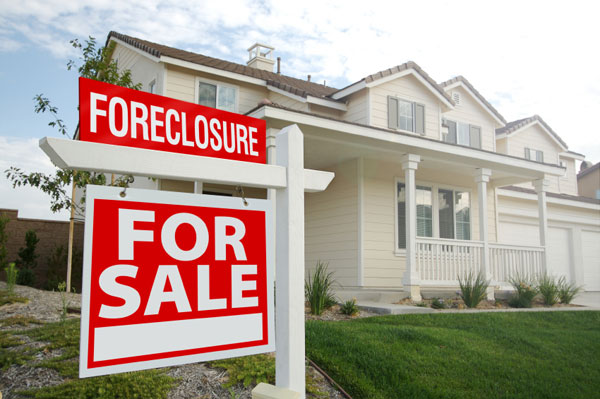
foreclose.jpegSome of our firm’s clients are in the business of purchasing notes and mortgages encumbering properties which are being foreclosed. This blog post will discuss the legal necessities behind such transactions. Careful planning, as well as consultation with legal counsel, can ensure that such acquisitions comply with all legal requirements and ensure that the purchaser obtains marketable title so that properties so acquired can be resold expeditiously if desired.

Most purchases involve notes and mortgages obtained from banks or other major institutional lenders. Although private mortgages can be purchased, a potential buyer may encounter more issues when buying a mortgage from a private lender, as opposed to a large financial institution. The first step in such a transaction is agreeing on the purchase price. The purchaser must determine the overall value of the property, usually through an appraisal as well as an inspection of the premises. Other financial information can also be obtained, such as rent rolls, which show rental income for commercial or other rental properties, such as apartment buildings. The purchaser then offers to buy the outstanding mortgage from the lender for a price lower than the amount owed by the defaulting current owner.

Major financial institutions will generally have a form contract that the purchaser of the mortgage in question must execute. Such agreements are usually not subject to substantial negotiation. The seller of the mortgage needs to agree to provide an assignment of the mortgage to the purchaser of the mortgage. The seller should also be obligated to provide the original note and mortgage documents as signed by the mortgagor. It is essential that the original loan documents be obtained in such a transaction. Without them, the right to collect on the mortgage by the purchaser may be challenged in Court, creating a major issue for a purchaser.

bellhop.jpgRegional news outlets in the New York metropolitan area recently reported on Airbnb, an online search engine used to locate short term rentals for those wishing to occupy an apartment in New York City. The Environmental Control Board of the City of New York evaluated whether an Airbnb rental of a room in an apartment, while one of the permanent residents remained in the apartment, constituted illegal use of a residential apartment. The Administrative Law Judge who heard the matter found that “temporary occupancy of the apartment by a paying boarder with a permanent occupant present was consistent with the occupancy of the apartment for permanent residence purposes.” New York State’s Multiple Dwelling Law permits occupancy for fewer than thirty days if the permanent occupant is also present OR incidental occupancy for fewer than thirty days without the presence of the permanent occupant so long as no monetary compensation is paid. Notwithstanding the case at issue, State Senator Krueger maintained that “short-term rentals of apartments in residential buildings without any permanent residents present remains unambiguously illegal.”

The Airbnb case reminds this author of a case that she litigated several years ago entitled Hoffman v. 345 East 73rd Street Owners Corp. (New York Law Journal 10/2/1992 p. 26 col. 4). The Hoffman case involved a shareholder in a cooperative building who was renting out his apartment as a “bed and breakfast” accommodation, without his presence, in order to cover his expenses in maintaining the apartment. The cooperative board discovered his illegal arrangement when one of his guests, with suitcase in hand, asked the doorman “where’s the bellhop?” Mr. Hoffman sued the cooperative for interfering with his right to use his apartment as he wished, but did not prevail in the lawsuit.

The focus of the recent press concerning this issue is whether apartment owners or renters are illegally maintaining a hotel business and, in doing so, failing to pay the hotel occupancy tax to the authorities that collect same. While these are important topics, they are outside of the scope of this blog post. We wish to discuss occupancy rules and restrictions contained in documents to which apartment owners and renters are subject. The proprietary lease at issue in the Hoffman case is very similar to most proprietary leases in New York City. It allows occupancy as a personal residence by the shareholder and (emphasis added) persons of particular relationship to the shareholder, as well as guests for no more than one month if (emphasis added) the shareholder is in residence at the same time. Standard proprietary lease language does not contemplate commercial use in this manner, being paid by someone to use the apartment while the owner is not also present.

mosque.jpeg Observant Muslims in New York State who seek financing for the purchase of residential or commercial real estate may have issues with traditional mortgage loans. The reason for this is that, under traditional interpretations of Koranic law, the payment or receiving of interest is considered forbidden (“haram”). While a thorough theological explanation is beyond the scope of this article, the main principal involved is that, under strict Islamic law, the exchange of capital alone for debt is not balanced by any significant advantage to the borrower, because it is not associated with the type of risk that a business venture would entail. Therefore, a loan of funds which generates interest for the lender, to be paid by the borrower, is considered profiteering and contrary to the laws of Islam.
Therefore, a traditional mortgage loan, in which funds are lent for the purchase of a property, either residential or commercial, and the funds are paid back over time to the lender with interest, would be considered non-compliant with Islamic law. This prohibition would apply both to the borrower as well as to the lender.

This raises a dilemma for an individual who wishes to purchase real property. The first solution which comes to mind is simply to pay the full purchase price for the property, and not obtain any type of loan. However, most people do not have the funds to pay for a property “up front,” and therefore require a loan of some type in order to complete the transaction. Most home purchases in New York State require a 10% downpayment of the purchase price. For example, if the purchase price is $500,000.00, the purchaser would pay $50,000.00 prior to closing, and the remainder at closing. At closing, most purchasers would then use funds loaned to them by a bank or other institutional lender to complete the transaction. The lender would record the mortgage on the property to secure the loaned funds. The purchaser would repay these funds over time, paying annual interest on the amount borrowed.

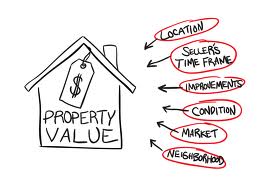
appraisal.jpgAn appraisal is an objective determination of valuation of an object or property. Lenders require an appraisal before the loan is funded at closing. If a purchaser is obtaining a loan for $400,000.00 and the purchase price is $500,000.00, then the lender will not fund the loan unless the appraiser determines that the property is worth at least $500,000.00. If the property appraises for less than $500,000.00, the parties have various options.

Typically, contracts to purchase real estate contain mortgage contingency clauses, which essentially provide that if the purchaser does not obtain a commitment from an institutional lender within a certain period of time after having applied for such financing according to the contract, then the purchaser can cancel the contract and obtain the refund of his downpayment. In New York contracts, a portion of this standard loan contingency provision states that if the commitment is conditioned on the lender’s approval of an appraisal, then the purchaser is not bound until and unless the lender has approved the appraisal.

Prior to the “Great Recession”, it was not uncommon for loan officers to interact directly with appraisers by engaging their services and suggesting the amount needed for the property valuation by “prompts”. If the purchase price in the contract or the loan amount applied for in a refinancing was $350,000.00, the property must be “worth” at least $350,000.00. However, as learned in recent years, property values were inflated in some instances to justify the transactions and the homeowner was left with an “underwater” property, with the loan amount exceeding the property value. As a result, lenders reacted and became more conservative. Appraisers are now more independent and objective. A loan officer is now strictly forbidden from contacting the appraiser. Another result is that appraisers from Long Island may be evaluating properties in Westchester, making them unfamiliar with the nuances of a locality that may enhance value.

reverse mortgage.jpgMany of us have seen the slick advertisements on television for reverse mortgages. An actor who is popular with our seniors will advocate the advertiser’s reverse mortgage program as a way to tap home equity and enjoy the “good life”, the long awaited vacation or purchase of a new car or boat. However, the reality of reverse mortgages can be quite contrary to these advertisements.

A reverse mortgage is a home equity mortgage program only available to homeowners over the age of 62. These mortgages are insured by the Federal Housing Administration, a division of the Department of Housing and Urban Development. A portion of the home equity is made available for the loan, which proceeds are distributed in several ways. The homeowner can receive the proceeds in (1) monthly installments for so long as he lives in the house, (2) monthly installments for a set period of years or (3) as a line of credit that can be used as needed. Unlike a conventional mortgage, a reverse mortgage does not need to be paid until the borrower dies or no longer occupies the home as his primary residence. Not needing to make a monthly payment while having funds available for home improvements, medical expenses or other retirement needs is obviously highly attractive to seniors.

However, this author wishes to demonstrate particular concerns with respect to reverse mortgages that have actually been experienced by some of her clients. A reverse mortgage borrower must be at least 62 years of age. Let us consider a married couple that jointly owns their home, the wife is 57 and the husband is 63, meaning that only the husband can become the borrower. If the husband dies first, the surviving widow will be unlikely to repay the loan which is now due in full (without selling the house in which she may wish to continue living). The primary residence requirement may also cause difficulties. If the borrower needs to live in a residential care facility indefinitely due to medical issues, the loan will be due in full and the borrower will be unlikely to have the funds to repay. Of course, once the borrower dies, triggering the due in full provision, the lender may not patiently await receipt of the house sale proceeds needed to repay the loan and may commence a foreclosure or other legal proceeding. After the financial crisis of 2008, homes have not sold as readily as in the past, making it more difficult for survivors to sell homes to satisfy the reverse mortgage lender’s schedule. Further, with home values having dropped in recent years, there may be insufficient proceeds from the house sale to pay the loan, making the balance due from the estate.

flip.jpgThe resurging real estate market brings with it the real estate “flipper”. A flipper is a person or entity that purchases property with the goal of renovating it for a quick sale at a substantial profit. The flipper never intends to occupy the property in the neighborhood. Recently, the Wall Street Journal reported that luxury homes are joining more modest properties in the flip market. Even cooperative and condominium apartments can be subject to flipping.

In a market-oriented society such as ours, one could argue that it is one’s own business as to how one invests and that properties can be purchased and sold despite one’s intent. However, others may argue that it is unseemly for opportunists to purchase properties merely with the intent to harvest a profit. The following are examples of how this plays out. A lender takes back a house in disrepair through the foreclosure process. Prior to the foreclosure, which took years, the house fell into significant disrepair and was unsightly to neighbors. Perhaps hazardous conditions developed from a dismantled oil tank and the removal of copper materials from the home. The foreclosed eyesore potentially reduces the property values of the surrounding neighbors. In this scenario, anyone who eventually purchases the house from the foreclosing lender and rehabilitates it into a habitable and cosmetically pleasing condition should be appreciated. Since the flipper’s goal is to sell to a person who will occupy the home, the flipper is this instance is beneficial to the neighborhood. Ultimately, there will be an occupant who becomes a neighbor contributing to the community.

Flipping takes on a different complexion in a cooperative building. It is not unusual for cooperative apartment corporations to charge a “flip tax” upon the sale of a unit. While flip taxes are typically charged on all sales, the philosophy behind them is to discourage short term ownership merely intended to raise a profit and to move funds back to the cooperative community upon sale in a means to benefit the entire cooperative “neighborhood”. Flip taxes are calculated in several ways, such as by a certain dollar amount per share. If one owns 200 shares and the flip tax is $5 per share, then the flip tax collected would be $1,000. Some buildings calculate the flip tax as a percentage of the sale price. If the sale price is $400,000 and the flip tax is at 1%, then the flip tax charged would be $4,000. Flip taxes may also be calculated as a percentage of the net profit, such as sale price minus original purchase price, less sale expenses such as brokerage commissions and transfer taxes. Flip taxes are to be enacted in accordance with the building’s governing documents, giving particular attention to whether the Board or all shareholders must vote on their enactment and the percentage approval vote required. Since most units within a building are similar and the state of repair is not apparent from the hallway or outside the building, flipping a unit is not necessarily beneficial to the rest of the building unless a flip tax is charged to the seller.

polish.jpegA recent article in the Journal News discusses the sale of the Yonkers Polish Community Center to the Church of Jesus Christ of Latter Day Saints. As the author has enjoyed many events at this Center, and will certainly miss attending events if the center is sold, this article discusses the possible legal remedies when one of the parties to a real estate contract will not complete the transaction.

In the situation discussed in the article, the buyer has given the seller a downpayment in the amount of $120,000.00. Although we are not familiar with the specific facts of this transaction, a downpayment is generally held in escrow by the seller’s attorney until the sale closes or the transaction is cancelled because the purchaser could not obtain a loan commitment, or for another contractual reason.

There may be certain situations in which a seller wishes to transfer title to a property, but encounters legal difficulties in doing so. For example, a Religious Corporation, such as a Church or Synagogue, may seek to sell certain property. This subject was addressed in a previous blog post. Such a transaction must be approved by the New York State Attorney General. In addition, our firm has encountered situations where certain congregants challenge the decision to purchase or sell certain Church or Synagogue property in New York Supreme Court.

Contact Information