Commercial-Space-For-Lease.jpgOne of the main purposes behind the formation of a corporation in New York State is to insulate the principals of the corporation from personal liability for the corporation’s debts and obligations. The general law is that once a corporate is legally formed, and the business observes the specific requirements for corporate formation and structure, such as the filing with the New York Secretary of State of a certificate of incorporation, the officers and directors of the corporation are not personally liable for the obligations of the corporation.

Of course, as with any general principle of law, there are always exceptions. Some of these exceptions include a situation where it can be shown in Court that the corporation was formed fraudulently, and is serving as a mere “alter ego” of an individual. Proving this can be difficult, and would depend on the individual circumstances of the corporation’s day-to-day operations. This legal concept is known as “piercing the corporate veil,” and is applied very rarely to assign personal liability to a corporation’s officers and directors.

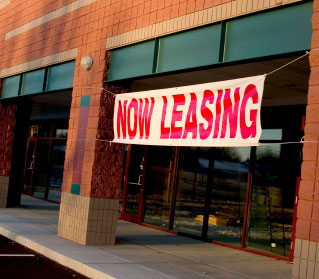
A more common situation, and one which will be examined in more detail in this blog post, is where a corporate officer or director personally guarantees the obligations of the corporation. One example is where the corporation seeks a commercial lease for office space or a retail store. A landlord may demand that a corporate officer personally guarantee the corporation’s obligations under the lease. If the corporation then defaults under the lease, the individual who guaranteed the lease may find himself personally liable for the corporate obligations under the lease.

The Wall Street Journal recently reported the filing of a lawsuit by “Law & Order” actress S. Epatha Merkerson concerning conditions in her New York City cooperative apartment. While the lawsuit has gained the attention of the press because it involves a celebrity, the conditions described in the lawsuit are commonly experienced by numerous New Yorkers.

The lawsuit alleges that the condition of the building’s roof caused leaks and mold conditions to the cooperative apartment owned by the actress. After the purchase of the cooperative apartment, the cooperative made repairs to the roof over the plaintiff’s apartment. Said repairs are alleged to have been insufficient, causing continued water leaks and mold to develop. The actress claimed that she was unable to live in the cooperative apartment, as well as being unable to sell the apartment or sublet it at market value.

Most of the claims in the lawsuit involve the statute known as New York State’s Warranty of Habitability Law. This law requires that residential premises be fit for human habitation and that residents not be subjected to conditions that are dangerous, hazardous or detrimental to their life, health or safety. The Warranty of Habitability Law is most commonly applied to rental apartments in New York State. Nonetheless, it is longstanding caselaw in New York State that the Warranty of Habitability Law also applies to cooperative apartments. The application of the Warranty of Habitability differs depending on the type of housing to which it is applied. For instance, if a condition is solely within the walls of the apartment and was not caused by an external factor, it is the responsibility of a cooperative shareholder individually. In a rental unit, the same condition would be the responsibility of the landlord, but not the tenant.

A prior blog post discussed issues relating to a property partition action in New York State. To summarize, when two or more co-owners of a property are unable to agree on the disposition of a jointly-owned property, a partition action may be brought by one of the owners. The Court will review the evidence and rule on the disposition of the property.

The general legal principle underpinning a partition action is that the property dispute should be handled fairly and equitably for all parties. This means that a Court will attempt to divide the property, if possible, according to the ownership interests of the parties to the case.

The first question that a claimant must answer is whether the property is capable of being physically divided in a fair manner among the co-owners. The physical division of a property is a fact issue for a Court to determine. Residential property such as a house is usually not capable of being sub-divided among the parties. For example, a single or two family house cannot be physically divided into separate properties, each with their own lot and tax bill. If the land in dispute is simply vacant land without any improvements, then it may be possible to divide the lot into separate properties, with the co-owners receiving shares of the new lots in proportion to their ownership percentages of the original property.

blog photo 91412.jpgWhen an estate in New York is probated in Surrogate’s Court , it is a legal requirement to submit the original signed will as part of the Court filing. On occasion, the original will intended to be submitted may be lost or destroyed. There are several potential reasons for the original being unavailable, perhaps it is simply misplaced, a person adversely affected by the will may have intentionally destroyed the document or the decedent decided that the will no longer conformed to his wishes for the disposition of his property and destroyed the document prior to his demise.

Surrogate’s Court Procedure Act Section 1407, the statute that governs probate proceedings in New York State, provides solutions to this situation. In New York State, it is presumed that a will has been revoked if the original can no longer be located, particularly if it was signed and the original was known to be kept in the testator’s possession. The person proposing to have a copy or a draft of a will admitted to probate needs to demonstrate by clear and convincing evidence that the will has not been revoked, that the will was executed as required by New York State law, and that the testator had capacity to make the will, which was entered into without fraud or undue influence. At least two credible witnesses are then required to testify as to the provisions of the will or a copy or draft of the will that is true and complete is to be submitted to the Court. A photocopy of the will may then be admitted to probate in this instance if it is demonstrated that the original will was not last in the possession of the decedent. However, the fact that the testator possessed a fully executed copy of the will at his death will not prevent said copy from being admitted to probate.

Further, if the will was lost or destroyed by a cause not of the decedent’s act, the Surrogate’s Court will be likely to admit the will to probate. The witnesses may indicate that the will was destroyed without the knowledge or consent of the testator or that the will was destroyed when the testator was under undue influence or without mental capacity to revoke. Acceptable causes of destruction for these purposes include a fire at the facility where the will was stored. The recent anniversary of the terrorist attacks on September 11, 2001 reminds us that storage locations were also destroyed on that day and that important documents such as wills were also ruined. If the proponents of the will can show that the attorney who drafted the will or the bank with the safe deposit box holds the original, but for some reason cannot or will not release same, the Court will be likely to admit a copy of the document to probate.

As a previous blog post has discussed, Westchester County settled a lawsuit brought in 2009 which alleged that the county falsely certified that it had complied with federal fair housing requirements when it accepted community development funds. This lawsuit was settled under a consent order under which Westchester County agreed to use $51.6 million to build 750 units of “affordable” housing over seven years in 31 communities throughout the county.

Any settlement of a complex litigation matter involves necessary compromises for all parties involved. Complicating the situation is the fact that the settlement was negotiated and executed by County Executive Andrew Spano, who is no longer in office. The current county executive is Rob Astorino, who had no role in the original settlement. A recent editorial by Mr. Astorino in the Journal News states his position on the matter. He believes that the county is complying with its obligations under the settlement agreement, but believes that the U.S. Department of Housing and Urban Development (HUD) is overreaching and has misinterpreted the intent of the agreement.

At the core of the dispute is the question of the required goals of the settlement. Mr. Astorino believes that the settlement is meant to promote affordable housing throughout the county, and is committed to building the 750 units as mandated by the agreement. HUD’s interpretation is that the overall goal is to integrate the county’s housing patterns, and that such integration should be the primary purpose of the settlement.

There are several situations where ownership of real estate in New York generates the need for an accounting procedure. When a new owner takes over a property as a result of a lawsuit or successful foreclosure action, the property in question may have been managed by third parties, such as a managing agent, over a period of time after a new owner has legal title to the property, but before the new owner can hire a new managing agent and transition from prior ownership to new ownership.

Other similar situations occur when there are multiple owners of a property, but where not all owners take an active role in the property management. There may come a time where the “inactive” owners feel that they are not receiving their fair share of the property’s profits, or simply want an accurate accounting of the income and expenses from the property in question.

Finally, there may be a situation where a managing agent is hired by an owner to run the property, and the owner feels that the managing agent is not accurately reporting the property’s profits or turning over the profits as is their legal obligation.

63NEliasnew2.jpgShortly after the death of a loved one, survivors often contact us with respect to our legal representation of the estate . This post discusses the practical steps recommended for survivors. There are multiple variables to be considered, such as whether the deceased made a valid Will, whether there are disputes among surviving family members, property owned and the like. While we advise clients not to make impulsive decisions soon after the death, there are particular matters that deserve immediate attention.

Securing property and personal possessions need to be high on a New York estate administrator’s checklist. There are unfortunate instances of people who read obituaries to determine the time and date of the funeral, so that they can enter the deceased person’s home to take valuable possessions. Likewise, if the survivors live out of state or the surviving spouse is ill, the home needs to be secured from vandals and thieves. Even family members who are estranged may seek entry into the home to obtain jewelry and valuable heirlooms. Domestic workers and caregivers may already have a key, gain entry to the home and leave with the family’s treasured belongings. The solution to these problems is for the estate representative to change the locks to the home and install or use an alarm system if possible. Even notifying the local police and requesting increased patrols may be prudent.

Other tasks to be completed quickly include having the mail held or forwarded and suspending newspaper and magazine deliveries. The property should be maintained as is customary, with regular landscaping and snow removal. Credit card accounts should be closed to prevent fraudulent transactions. Other accounts such as those with utility and telephone service providers should be terminated as soon as possible. Government agencies such as the Social Security Administration and Department of Veterans Affairs should be advised, so that survivor benefits commence as soon as possible. Applications for death benefits should be made with employers. Life insurance carriers should be notified so as to expedite claims. Health insurers should be advised of the death so that premiums do not continue to be charged. A lease for an apartment or other rental property should be surrendered as soon as practicable.

The large number of foreclosed properties in New York State has caused a situation where banks may be more willing to compromise when a borrower cannot make their mortgage payments. If a lender proceeds with a foreclosure to its final conclusion, the lending institution will end up taking title to the property. Many lending institutions would rather not be “in the business” of owning, selling, and managing real estate. As a result, there are several alternatives to foreclosure which may be available. The first is a loan modification. As discussed in a prior blog post, courts in New York State are required to attempt to settle foreclosure actions in a separate foreclosure part.

Another alternative is a short sale. A short sale happens when the mortgage balance exceeds the current value of the property. This is an increasingly more common situation in our times, as lenders in the past were overly generous in issuing loans on properties, including second mortgages. Overly optimistic appraisals and credit reports were the foundation of said loans. Combined with a recent decline in real estate values, the result is that many homeowners find themselves unable to pay their mortgage, and also find that the total debt on their property may exceed the current fair market value of the property.

When this occurs, the borrower may ask the lender to allow a “short sale” on the property. A short sale is when a lender allows the property to be sold for less than the amount due on the mortgage, and then forgives the rest of the debt on the property after the sale. The main reason that this may be an acceptable alternative for a homeowner is that they remain personally liable on the Note and Mortgage, even after foreclosure and sale of the property. A lender may seek a deficiency judgment against the borrower if the property is auctioned for less than the amount owed by the borrower. This can result in a large judgment entered against the borrower, and could result in the borrower having their personal credit damaged, or being forced to file for personal bankruptcy.

blogpostphoto72612.jpgThose who bid at property auctions in New York are confronted with many potential issues. Auction properties are often attactive to first-time homeowners and to investors because they are perceived as being less expensive than comparable properties. If the property is residential, the bidding process differs based upon whether the property is a single-family house, a condominium unit or a cooperative unit. The type of property, whether it is commercial or residential, may have implications for tenants already in occupancy and whether such tenants may have statutory occupancy rights.

The auction process for a single-family home is similar to the auction process for a condominium unit, because both types of property are real property. The major difference is that common charges are levied by the Board of Managers of a condominium, allowing for the filing and foreclosure of a lien for unpaid common charges by the condominium Board. However, once the matter is in foreclosure, it is supervised and directed by a Court, meaning that same is litigated and requires a judgment of foreclosure issued by a judge before proceeding to auction. In a condominium, mortgage balances take priority over unpaid common charges. As such, in many cases, an auction bidder in an auction for unpaid common charges will likely be taking the unit subject to the outstanding mortgage, requiring the successful bidder to pay mortgage arrears and keep the mortgage current to avoid foreclosure.

Cooperative bidders will experience an auction process that is non-judicial (not supervised or litigated in the Court) unless a party requests that a Court issue an injunction to prevent or delay the auction. Since cooperative maintenance charges take priority over a share loan, it is possible for an auction bidder to obtain the unit for only the amount of the maintenance arrears and sever the security interest of the lender, provided that the auction is properly noticed. Our readers should note that this is an unlikely scenario because most lenders will choose to cure a maintenance default by paying it themselves, because a cooperative unit is likely to be more valuable than the maintenance arrears due to the cooperative.

585559__1.jpgA recent article in the Journal News discusses the latest developments in the Westchester County, New York fair housing settlement. For those who are unfamiliar with the situation, a lawsuit was brought by a public interest group against Westchester County, alleging housing discrimination. In order to settle the lawsuit, then-County executive Andrew Spano agreed to build at least 750 units of “affordable housing” in Westchester. This blog post will discuss the ramifications of the settlement, as well as the legal issues associated with the sale and resale of affordable housing.

Long-time Westchester residents will recall that in 1980, a similar case was brought against the City of Yonkers, also alleging discrimination in housing. While it is beyond the scope of this post to address the merits of this case (as well as the case against Westchester), the legal issues become important for potential buyers and sellers of property in Westchester. In the Yonkers case, Judge Leonard Sand ruled that Yonkers had discriminated against minorities and ordered the city to provide low-income housing in all areas of Yonkers for minority applicants.

Of course, implementation of such a remedy is far from simple, and the Yonkers case involved many years of litigation over the issue of whether the city was in compliance with Judge Sand’s directives. Unfortunately, the same issues now seem be arising in the Westchester County lawsuit. Once a municipality enters into a settlement of a discrimination lawsuit, as Mr. Spano did on behalf of the residents of Westchester County, there may be no end to judicial enforcement of a remedy. It seems unlikely that a Court will ever reach a finding that no further discrimination exists and end its supervision of the construction of affordable housing.

Contact Information