


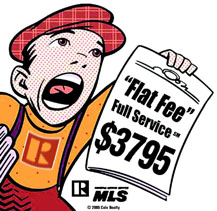
 Bundled services have commonly been offered to purchasers of real estate in New York. For example, a real estate broker, wishing to enhance an affiliated title insurance company, has a program that encourages attorneys to refer their title business to the title company. A title agent provides tax reduction services as a benefit to its title customers. Mortgage providers may have an affiliation with a real estate broker. Purchasers may consider bundled services to be convenient and beneficial. They may be unfamiliar with the community in which they are purchasing or new to the process, giving them the tendency to trust recommendations of professionals that they have already selected. However, in some cases, bundled services predominantly benefit those entities to which the referral is made and do not necessarily result in better or less expensive service for the customer.
Title insurance companies are highly competitive entities that have fewer transactions to close since the “Great Recession”. In an effort to stand out among their competitors, it is not unusual for a title company to have an affiliated mortgage loan provider or title insurance company. They argue that closing issues can be resolved more readily since the servicers are constantly working with one another. Real estate brokers want to make sure that their purchaser can obtain financing, so referring to their affiliated entity is perceived by some as making the issuance of a loan commitment more likely. In some cases, they attempt to bring attorneys, who they select to be on an “approved list”, into the arrangement. Purchasers should be aware that in order to be on the “approved list”, an attorney may be requested to refer its title business to a particular entity on substantially all of his or her transactions, even those that did not result from the real estate broker with the affiliated title business.
Some title insurance companies that have lost transactions from attorneys on approved lists with other title companies are crying foul to this arrangement. They argue that the deck is stacked against them, in that the title company is in effect selected before the contract is even signed. While the real interest in the complaints may be to stifle the competition, there are legitimate reasons for some of the objections. New York’s Insurance Law provides that those who accept or receive a quid pro quo are subject to financial penalty. Title companies have been forbidden from providing goods of value as an inducement for future business. Expensive gifts and tickets to sporting events are of concern. Financial inducements (kickbacks) are prohibited. Invitations to continuing education events and office supplies are not considered an inducement for business. It is not unusual to refer business in any field to a golfing buddy, but if the service is deficient or too expensive, it only benefits the person who wants to keep playing golf, rather than the purchaser.
 A
A  We are pleased to announce that as of April 15, 2013, the law firm of
 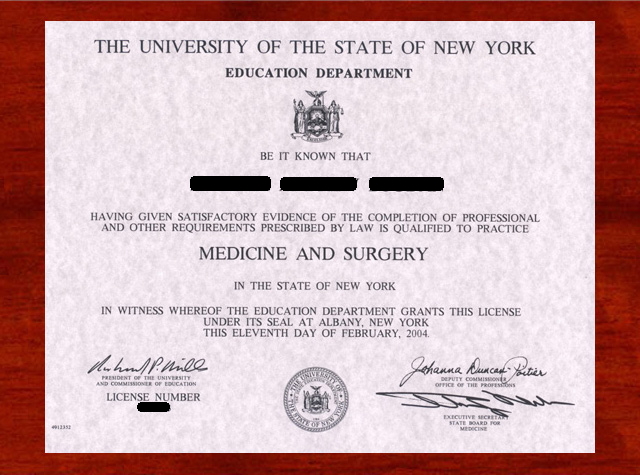 Our firm often interacts with other professionals, such as doctors, architects, and accountants, in the course of our practice. This can happen in several ways. The first is when such services are needed by our clients in the course of litigation. For example, an architect may be needed to evaluate whether a property can be divided in separate parcels in a partition action. Courts will consider this separation to be the preferred remedy, so the expertise of an architect is often needed to provide their professional judgment on whether the property can be subdivided.
  This blog post contains a description of some of the standard substantive objections that a person may have to the admission of a Will to probate.
  Inquiries are often made of
 For various reasons, not everyone dies has a Will that disposes of their property and identifies the person authorized to manage such distribution. In such a case, the surviving heirs should
  Our readers should be wary of persons who may be engaging in the unauthorized practice of law. This issue is defined as a non-lawyer rendering legal advice or drafting legal documents. Section 478 of New York’s Judiciary Law declares that it is unlawful to practice or appear as an attorney for another person, to render legal services or hold oneself out to the public as entitled to practice law,
  Often the most significant asset owned by a religious corporation such as a church, synagogue or mosque in New York is real estate. For a variety of reasons, the religious institution may wish to sell, mortgage or lease its property. New York’s Religious Corporation Law prescribes the procedure to be followed in order to legally complete such a transaction. For the purposes of our discussion in this blog post, we will be discussing a sale by a religious corporation.