Articles Posted in Real Estate Transactions and Finance

CDIn a prior post , we alerted our readers that the HUD real estate closing form as they knew it would be disappearing from closings.  In a later post , we informed our readers that the new loan closing disclosure rules were in effect.  Several months after the implementation of these rules, we would like to share with you our observations of how clients have been dealing with these new rules.

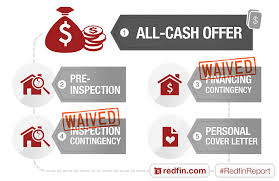
Fortunately, we have experienced a busy home transaction season.  On the flip side, we have observed that transactions are closing approximately one month later than they did prior to the implementation of these new rules.  The exception to later closings is when a transaction is all cash, which does not require these disclosure documents and the mandatory waiting periods involved.  Longer closing timeframes are a result of lenders taking longer to issue the loan commitment, evaluate collateral, and clear the loan to close.  Even if the buyer and seller are ready and anxious to close, the lenders have been disregarding the will of the parties because they can incur substantial fines for failure to provide timely disclosures under the new regulations.  Lenders may also need to refund money to borrowers if the closing costs are higher than were disclosed.  The mandatory disclosure timeframe can be shortened in rare circumstances, such as an actual emergency.  An emergency is not that a buyer is going to have a baby imminently and wants to get settled, but is when a buyer may lose her downpayment by needing to react to a time of the essence closing notice or if the property is about to miss a short sale closing deadline .

Lenders have become much more inconsistent and conservative in recent months.  We have found that most lenders are internally deciding to require disclosure timeframes that are longer than required by law.  We have noted that one regional lender has required that even more time pass than required than a major national lender that is complying with the law.  A lender that is open for business on Saturday may seem to get the parties to closing faster because it can count Saturday as one of the disclosure days.

Recent posts on this blog have discussed legal issues relating to house rentals in New York.  Many of our clients have second houses, vacation homes, or multiple properties which they rent to tenants.  This post will discuss legal issues that arise when an owner seeks to sell a property that is currently being rented to a tenant.

The first issue which may arise relates to access to the property in question for potential buyers.  We advise that any house lease contain a clause that allows the landlord (and their agents) reasonable access to the property to show it to possible buyers.  This will allow the property to be shown to third parties during the tenancy in question.  Another issue that will arise is ensuring that the tenant keep the property in good repair.  Again, the lease with the tenant should contain a clause relating to the tenant’s obligations in maintaining the property.  This may include using the same vendors which the owner/landlord currently uses.  We also advise that an experienced attorney draft specific provisions relating to the tenant’s obligations concerning the conditions of the house, such as the vendors to be used for outside maintenance, roof and gutters, and repairs to appliances.

Of course, the tenant should be advised by the landlord that the property may be sold.  Some leases may contain clauses allowing the tenant to purchase the property, either at a set price or “at a price to be agreed to between the parties.”  The problem with the latter clause is that if the parties cannot agree on a price, then there will be no purchase.  We would advise using a specific amount in any such purchase option clause, but also having a specific date by which the tenant must exercise their option to purchase.  Then, if the option is not exercised, it will lapse and be of no further effect.

mtgcont
Sellers of real estate in New York  perceive the current market as one with a tight inventory for desirable properties.  In such a market, multiple offers may be available to a seller.  In order to select one offer over another, a seller may demand that the buyer who intends to obtain a mortgage waive the standard mortgage contingency clause in the proposed contract.  This post will discuss whether waiving the mortgage contingency is a risk that a buyer should take.

In a typical New York real estate contract, various contingencies (conditions) need to be met between signing the contract and closing.  Some of the conditions usually include proof of clear title, a satisfactory appraisal , approval of the finances of the cooperative building and the like.  If the conditions are not met, the downpayment will be delivered to the seller or the buyer, depending on the circumstances.

A mortgage contingency clause works as follows.  After the contract is signed, the buyer is afforded a particular number of days to obtain their loan approval.  If the buyer does not obtain the loan, he can show that the loan was declined and request the refund of the downpayment.  During this period of time, the seller is required to remove the property from the market and is relying upon this particular buyer to close.  If the buyer has a valid legal right to cancel the contract and receive the return of his downpayment, the seller has lost potentially two months in being able to market the property again.  In New York, missing an opportunity to market the property during the Spring and Summer seasons could cause the property to be overlooked by buyers until the following Spring, because most contracts are signed in the Spring and Summer months.

deficiencyPrevious blog posts have discussed foreclosures in New York State.  Many of our clients own either residential or commercial property and may not be able to make their mortgage payments.  They may become subject to a foreclosure lawsuit brought in the appropriate Supreme Court, in which the lender seeks to foreclose on its mortgage and take over ownership of the property in question.

However, our firm is often asked what happens after the lender takes ownership of the property from the borrower.  This is usually done after a public foreclosure sale of the property before a court-appointed Referee.  The Referee will then prepare a Referee’s Deed, in which ownership of the property is transferred from the borrower to the entity which was the successful high bidder at the foreclosure sale.  The Referee’s Deed is then recorded with the County Clerk’s Office in the county in which the property is located.

Does the foreclosure action end at that point?  Generally the answer is yes, but not always.  The lender, which can be either an institution such as a bank or credit union, or an individual, may seek a deficiency judgment against the borrower after the foreclosure sale is finished. Whether this happens is dependent on the successful bidder at the foreclosure sale.  Before the public auction, the lender will make public the amount which the borrower owes on the property.  This amount will include all principal and interest on the loan being foreclosed, the costs of the foreclosure, including attorney’s and referee’s fees and court costs, as well as any other expenses that the lender incurred in foreclosing the property.  Let’s assume that this amount is $500,000.00.  Any third-party bidder (anyone who is not the lender) for the property must bid at least this amount for the property.  In the example given, the bidding would have to start at $500,000.00.  Assuming someone believes the property is worth at least this amount, the highest bid which exceeds $500,000.00 would pay this amount to the Referee and become the owner of the property.  The first $500,000.00 of the successful bid would be paid to the lender, with any remaining sums going to any creditors of the borrower who have appeared in the foreclosure action, and any surplus after that paid to the borrower.  In such a case, there would be no deficiency judgment.

touroRecently in the news is a story relating to control over Touro Synagogue, located in Newport, Rhode Island.  The Touro Synagogue was built prior to the Revolutionary War and is one of the oldest congregations in the United States.  As with many older institutions, over the centuries, the original congregation and their descendants eventually moved from the area in question.  Many of these individuals settled in New York, and formed a new congregation, named Shearith Israel.  The original congregation in Rhode Island dwindled and even fell dormant for a period of time.

According to the Court records, there is a dispute between the current congregation of Touro Synagogue, now named Jeshuat Israel, and the New York congregation, Shearith Israel, over who was the rightful owner of the Touro Synagogue, and who has the right to make decisions such as the sale of ornaments in order to raise funds.

Our firm has handled similar cases involving control over religious institutions.  Many churches and synagogues experience changing congregations and conditions over a long period of time.   Depending on the location of the institution, members may move from the area, causing a sharp decrease in active membership.  At that point, the institution must decide whether to continue in its present location, or consider moving to another part of the New York where membership may increase.  Moving an institution will usually involve the sale of the current location.  Such a sale must be approved by the Board of Trustees or other governing body of the institution in question.  Prior blog posts have discussed the handling of legal disputes relating to control over a religious corporation.

houserentalSome of our clients have a reason why they will not live in their house in New York for a particular period of time.  Perhaps an employment assignment in another location has caused the homeowner to leave the area for a set period of time and the homeowner intends to return to the house.  Maybe the homeowner is downsizing, but the sale market is not strong enough to command the price sought by the homeowner.  For those intending to rent their home, we  wish to convey the following advice.

We suggest that you have professionals involved.  Engage the service of a licensed real estate broker.  The fee, usually one to two months’ rent, is a relatively modest amount to pay to insure that a professional locates a reliable tenant.  If you decide to forego the services of a real estate agent , make sure that you carefully evaluate the proposed tenant by obtaining references from prior landlords and perform a credit check.  Whether the tenant is located by a real estate broker or by your own efforts, trust your instinct if the tenant raises any concerns whatsoever and do not rent the house to such a person.  Prior to the delivery of possession, walk through the house with the tenant, in order to show how appliances work and to document conditions together.

We also recommend that you engage the services of an attorney to have a lease drafted by a professional.    A professionally drafted lease is important to have for several reasons.  It will clearly identify the appropriate provisions, even if the relationship with the tenant ends up going smoothly.  Your attorney will be prepared to cover changes in the law that the landlord may not be familiar with, such as the requirement to advise the tenant whether an automatic sprinkler system is present at the premises.  In the event that a legal proceeding is required against the tenant for non-payment and other matters, having a professionally prepared lease will most likely cover items that protect the landlord in such a proceeding.  If you intend to rent the house repeatedly, you may want to ask your attorney to also provide a form that can be used by you in the future as your needs warrant.

firstIt’s that time of year again.  This author is not thinking about the chirping birds and blooming trees heralding the beginning of Spring. We are thinking about another sign of the season– the first time home purchaser.  This post will address issues pertaining to the person buying a home, whether a house or a cooperative or condominium apartment, for the first time.  Even if a person has owned a home in another state, real estate in New York is its own animal.

The most important aspect of our advice is that the first time homebuyer should surround himself with seasoned experts throughout the process.  In addition, let the experts do their work without your interference.  It is usually better for a first time homebuyer to work with a licensed real estate agent and to buy a property that is listed with a real estate agent, as opposed to buying a home that is listed for sale by owner.    That way, the real estate agents will resolve many of the issues that commonly develop in a transaction.  If both parties are not represented by real estate agents, then the buyer may not know how to best negotiate a favorable price.  Comparable sales should also be evaluated to determine the proper price to be offered by a buyer.  A real estate agent knows the area best, but also has the resources to locate the comparable sales data and to evaluate the data properly.

The first time homebuyer should also get his finances in order.  He should become acquainted with a potential lender or mortgage broker prior to making offers.  His offer is more likely to be accepted if accompanied by a pre-approval letter, so that the seller is comfortable with taking the property off the market for this buyer.  In addition, the proposed lender or mortgage broker may note possible deficiencies in the buyer’s potential loan application, such as inaccurate credit concerns, the necessity of reducing debt and the like.  Given the amount of the typical downpayment to purchase a property in the nymetro  New York metropolitan area, first time homebuyers may need a gift from their parents or other relatives to pursue the transaction.  The buyer should discuss this with the appropriate person in advance.  Further, once the gift is made, the parties need to be prepared to show the source of the gift, such as copies of bank statements before and after the gift, from the parent and the child.

leaseOur firm is often involved in landlord-tenant situations involving assignments of commercial leases.  What this means is that one party to a commercial lease (usually the tenant) wishes to transfer their rights and responsibilities to a third party, either an individual or company who is not a party to the original lease.  Most often this occurs when there is a potential sale of the business associated with the lease.

For example, a commercial tenant operates a car repair business and has a lease for the business for a period of five years.  A third party approaches the business owner and offers to buy the business.  As part of the purchase, the lease needs to be assigned from the current tenant to the purchaser of the business.

The main legal issue relates to the lease itself.  Most, but not all, commercial leases contain a clause allowing assignment of the lease to a third party with the consent of the landlord.  They may also state that such consent is not to be unreasonably withheld or delayed.  Some leases will further delineate what “unreasonable” may entail.  For example, it may state that it is not reasonable to refuse consent to a purchaser who intends to operate the same type of business as the current tenant, assuming they have the financial standing to assume the lease.

fraudOccasionally, our clients inquire as to whether a real estate transaction could  be considered a fraudulent conveyance.  This situation can occur when an individual or entity transfers property due to a judgment or pending judgment, in an attempt to evade creditors.  In New York, a judgment is a lien on real property for a period of ten years.  After ten years, the creditor can move to have the lien extended for an additional ten years.  Therefore, those who own real estate may have an incentive to transfer such property to prevent a lien from being placed on it, possibly for a twenty-year period.

New York Debtor and Creditor Law, Article 10, is the state law governing fraudulent transfers.  It states that, first, when any defendant transfers property in an attempt to evade a judgment creditor, that transfer is considered fraudulent and may be rescinded in a court action.  An important consideration in this evaluation is whether the transfer is made for consideration, that is, whether the person transferring the property received value in exchange for the transfer.

Let’s give a hypothetical situation to help clarify the law.  A husband and wife own a house jointly.  The husband alone is sued individually for a business debt, and a judgment is obtained against him.  Before the judgment is entered by the Court, the husband transfers his one-half interest in his house to his wife, so that the house is solely in his wife’s name.  The husband receives no compensation for this transfer.

march10It is not unusual for some of our clients to be presented with the following scenario.  An owner of a single family house or apartment falls behind on his mortgage and his lender commences a foreclosure proceeding while a sale is pending.  In an apartment scenario, the cooperative board pursues a maintenance default matter while a cooperative unit owner is actively attempting to sell the unit.  These are not situations where a short sale is sought.  Rather, significant equity exists.  The anticipated sales proceeds will allow for the full payment of the balance of the mortgage loan or maintenance arrears due to the cooperative.

Another common component of these situations is that the lender or cooperative board is aggressively pursuing their claim, jeopardizing the owner’s ownership of the asset.  For instance, if the lender forecloses on the mortgage, the homeowner will lose title to the property and have nothing to sell.  If the cooperative default goes to its final conclusion, an auction of the unit (and eviction of the occupant) , the unit owner will likewise lose her ownership interest.  These results should be avoided when the closing proceeds are more than sufficient to pay any outstanding amounts due.  The goal of the attorney representing the homeowner is to encourage the lender or the cooperative board to delay its proceeding pending the sale of the property , at which time the lender or the cooperative will be paid in full for the monies owed.  When a homeowner falls behind in payments due, he may claim to a creditor that he is trying to sell the home in an effort to stall proceedings.  While it may be true that the homeowner is trying to sell the home, the following suggestions may make such a claim more credible to the creditor and convince them to delay the proceedings.

First, it is helpful to have a skilled attorney  present this information to the creditor.  Second, for sale by owner scenerios  should not be used.  Having a licensed real estate agent involved who has an active listing that can be shown to the creditor is convincing evidence that the home is actively for sale.  Third, if there is a signed contract of sale with downpayment monies on deposit and also a loan commitment letter from the purchaser to deliver to the lender or cooperative’s attorney, such documents will show that the means to pay the past due balance will be imminently available.  A new loan may be sought by the homeowner as another means to resolve the default.  If these strategies are not effective, our attorneys may file an Order to Show Cause with the applicable Court, seeking a temporary restraining order curtailing the creditor’s right to pursue the activity until the sale occurs.

Contact Information