

Eviction Actions After Foreclosure in New York State


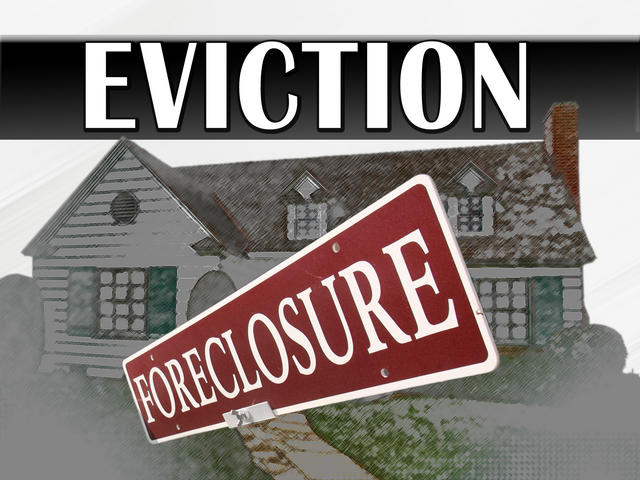 Some of our prior blog posts have dealt with the legal issues relating to foreclosure prosecutions and defenses in New York State. As discussed in these posts, foreclosures are legal actions in which a mortgage holder will legally obtain title to real property from a defaulting borrower. After obtaining a foreclosure judgment, the property is auctioned to the highest bidder, which is usually the lender bringing the action. The Referee will then prepare a Referee’s Deed transferring title to the successful bidder.
One question that often arises is when the owner continues to occupy the foreclosed property, or when there are tenants in the foreclosed property. What happens to these occupants when the foreclosure procedure is complete and title is transferred? There are several answers to this question.
When the original owner continues to live in the property after a lender has obtained title by a Referee’s Deed in foreclosure, the new owner must take legal action to evict the occupant. In New York State, such evictions can be accomplished under New York Real Property Actions and Procedures Law § 713. This section provides grounds for eviction “where no landlord-tenant relationship exists.” Subsection 5 provides that if the property has been sold in foreclosure, then a certified copy of the deed in foreclosure must be exhibited to the persons to be evicted from the premises.
Purchases of Distressed Mortgages on Foreclosed Properties in New York
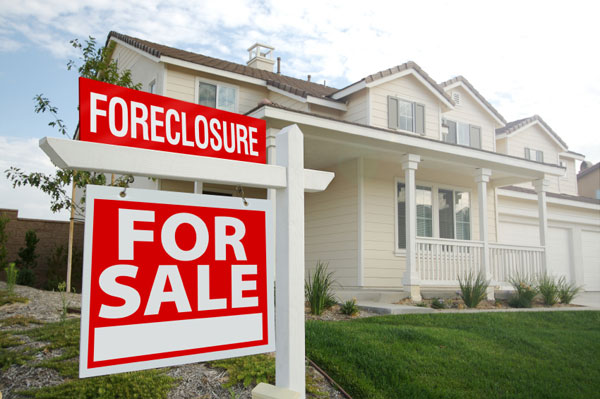 Some of our firm’s clients are in the business of purchasing notes and mortgages encumbering properties which are being foreclosed. This blog post will discuss the legal necessities behind such transactions. Careful planning, as well as consultation with legal counsel, can ensure that such acquisitions comply with all legal requirements and ensure that the purchaser obtains marketable title so that properties so acquired can be resold expeditiously if desired.
Most purchases involve notes and mortgages obtained from banks or other major institutional lenders. Although private mortgages can be purchased, a potential buyer may encounter more issues when buying a mortgage from a private lender, as opposed to a large financial institution. The first step in such a transaction is agreeing on the purchase price. The purchaser must determine the overall value of the property, usually through an appraisal as well as an inspection of the premises. Other financial information can also be obtained, such as rent rolls, which show rental income for commercial or other rental properties, such as apartment buildings. The purchaser then offers to buy the outstanding mortgage from the lender for a price lower than the amount owed by the defaulting current owner.
Major financial institutions will generally have a form contract that the purchaser of the mortgage in question must execute. Such agreements are usually not subject to substantial negotiation. The seller of the mortgage needs to agree to provide an assignment of the mortgage to the purchaser of the mortgage. The seller should also be obligated to provide the original note and mortgage documents as signed by the mortgagor. It is essential that the original loan documents be obtained in such a transaction. Without them, the right to collect on the mortgage by the purchaser may be challenged in Court, creating a major issue for a purchaser.
Rent Stablization and Bankruptcy in New York State
 An article in today’s New York Times discussed a case currently pending before the United States Court of Appeals for the Second Circuit. The litigation discussed involves a rent stabilized tenant who filed for Chapter 7 personal bankruptcy. Although the details of bankruptcy law are beyond the scope of this post, Chapter 7 bankruptcy involves a liquidation of the debtor’s assets, and will extinguish most debts of the debtor, making them uncollectible by the creditors.
In this case, the debtor filing bankruptcy was a tenant in a rent stabilized apartment. Rent stabilization is a type of rent regulation in larger cities in New York State that fixes the rent which a landlord may charge to tenants. It is most prevalent in New York City, but not every apartment will qualify for rent stabilization protection. For example, when one rents a cooperative apartment from the owner, rent stabilization will not apply. In addition, tenants whose income level exceeds a certain threshold may be disqualified from rent stabilization protection.
Rent stabilization protects the tenant in several ways. First, it limits the annual amount by which a landlord may increase the rent for the apartment. This amount is set each year by the Rent Guidelines Board, and their decisions are subject to annual predictable controversy as tenant groups lobby for smaller or no increases, and landlord groups request larger increases. Secondly, a tenant in a rent stabilized apartment is legally entitled to a lease renewal when their current lease expires.
Where’s the Bellhop?
 Regional news outlets in the New York metropolitan area recently reported on Airbnb, an online search engine used to locate short term rentals for those wishing to occupy an apartment in New York City. The Environmental Control Board of the City of New York evaluated whether an Airbnb rental of a room in an apartment, while one of the permanent residents remained in the apartment, constituted illegal use of a residential apartment. The Administrative Law Judge who heard the matter found that “temporary occupancy of the apartment by a paying boarder with a permanent occupant present was consistent with the occupancy of the apartment for permanent residence purposes.” New York State’s Multiple Dwelling Law permits occupancy for fewer than thirty days if the permanent occupant is also present OR incidental occupancy for fewer than thirty days without the presence of the permanent occupant so long as no monetary compensation is paid. Notwithstanding the case at issue, State Senator Krueger maintained that “short-term rentals of apartments in residential buildings without any permanent residents present remains unambiguously illegal.”
The Airbnb case reminds this author of a case that she litigated several years ago entitled Hoffman v. 345 East 73rd Street Owners Corp. (New York Law Journal 10/2/1992 p. 26 col. 4). The Hoffman case involved a shareholder in a cooperative building who was renting out his apartment as a “bed and breakfast” accommodation, without his presence, in order to cover his expenses in maintaining the apartment. The cooperative board discovered his illegal arrangement when one of his guests, with suitcase in hand, asked the doorman “where’s the bellhop?” Mr. Hoffman sued the cooperative for interfering with his right to use his apartment as he wished, but did not prevail in the lawsuit.
The focus of the recent press concerning this issue is whether apartment owners or renters are illegally maintaining a hotel business and, in doing so, failing to pay the hotel occupancy tax to the authorities that collect same. While these are important topics, they are outside of the scope of this blog post. We wish to discuss occupancy rules and restrictions contained in documents to which apartment owners and renters are subject. The proprietary lease at issue in the Hoffman case is very similar to most proprietary leases in New York City. It allows occupancy as a personal residence by the shareholder and (emphasis added) persons of particular relationship to the shareholder, as well as guests for no more than one month if (emphasis added) the shareholder is in residence at the same time. Standard proprietary lease language does not contemplate commercial use in this manner, being paid by someone to use the apartment while the owner is not also present.
Weiss & Weiss Blog- Case Updates
 From time to time, our attorneys become aware of updates relating to matters that we have discussed in our blog posts. This week, we have three such cases in which there have been new developments.
The Huguette Clark estate litigation has been the subject of a previous blog post . Our readers may be aware that the case was in the process of jury selection for a trial to be held. As is common, pre-trial procedures (and perhaps the Judge’s attitude that was displayed throughout the process) led the parties to believe that it may be more fruitful to settle the matter. Some of the details of the settlement were reported this week in the New York Times . The settlement distributed the estate as a “hybrid” of the two disputed wills. According to the settlement, distant relatives will receive a large portion of the estate (consistent with the first will) while various arts charities and a foundation will receive another large portion (consistent with the second will). The bequest to the caretaking nurse was nullified and she was ordered to return gifts received during Ms. Clark’s lifetime to the Estate. The attorney and accountant who were to benefit from the second will also had their bequests nullified. The arts charities will undoubtedly share the artwork with the general public, so that the settlement benefits the public interest. The lesson to be learned from the Clark Estate case is that those who inappropriately influence the elderly will not ultimately benefit from their acts.
Prior blog posts have discussed a federal lawsuit against Westchester County regarding grants from the U.S. Department of Housing and Urban Development (HUD). The lawsuit claimed that Westchester’s local zoning laws acted in a discriminatory manner towards those seeking to provide low-income housing.
Islamic Compliant Real Estate Mortgages and Loans in New York State
 Observant Muslims in New York State who seek financing for the purchase of residential or commercial real estate may have issues with traditional mortgage loans. The reason for this is that, under traditional interpretations of Koranic law, the payment or receiving of interest is considered forbidden (“haram”). While a thorough theological explanation is beyond the scope of this article, the main principal involved is that, under strict Islamic law, the exchange of capital alone for debt is not balanced by any significant advantage to the borrower, because it is not associated with the type of risk that a business venture would entail. Therefore, a loan of funds which generates interest for the lender, to be paid by the borrower, is considered profiteering and contrary to the laws of Islam.
Therefore, a traditional mortgage loan, in which funds are lent for the purchase of a property, either residential or commercial, and the funds are paid back over time to the lender with interest, would be considered non-compliant with Islamic law. This prohibition would apply both to the borrower as well as to the lender.
This raises a dilemma for an individual who wishes to purchase real property. The first solution which comes to mind is simply to pay the full purchase price for the property, and not obtain any type of loan. However, most people do not have the funds to pay for a property “up front,” and therefore require a loan of some type in order to complete the transaction. Most home purchases in New York State require a 10% downpayment of the purchase price. For example, if the purchase price is $500,000.00, the purchaser would pay $50,000.00 prior to closing, and the remainder at closing. At closing, most purchasers would then use funds loaned to them by a bank or other institutional lender to complete the transaction. The lender would record the mortgage on the property to secure the loaned funds. The purchaser would repay these funds over time, paying annual interest on the amount borrowed.
The Fluctuating Legal Rights of Same-Sex Couples
 The fiftieth anniversary of the March on Washington was recently acknowledged, celebrating the great civil rights battle for equality for our African-American citizens. More recently, same-sex couples have also been engaged in their own battle for equal treatment in issues such as the right to marry, taxation, health and pension benefits, and similar property and economic matters.
In June, 2013, the United States Supreme Court struck down the Defense of Marriage Act of 1996 (“DOMA”). DOMA specified that “…the word “marriage” means only a legal union between one man and one woman…and the word “spouse” refers only to a person of the opposite sex who is a husband or a wife”. The case at issue involved a lesbian couple who were married in Canada. One of the parties died and left her estate to her partner. The surviving widow filed the federal estate tax return that was due. Because the federal government did not consider the couple married for estate tax purposes, the estate was not qualified to apply the marital deduction available to heterosexual married couples, increasing the estate tax bill by several hundred thousand dollars. The Supreme Court ruled that it is a violation of equal protection principles and an infringement on state sovereignty for the federal government to maintain such a position. In Windsor, the Court determined that same-sex married couples are to be treated as married heterosexual couples and ordered the refund of the excessive tax payment.
In late August, 2013, the Internal Revenue Service issued a subsequent ruling that legally married same-sex couples will be recognized as married, even if the state in which they live does not recognize same-sex marriages. Our readers should know that two legal standards are at play. The “place of celebration” standard mandates that a couple will receive benefits as long as they are legally married, regardless of whether the state in which they now live recognizes the union. The “place of residence” standard mandates that if the state in which the couple lives does not recognize their union, then the couple will not receive benefits.
Albert Pujols and Defamation Law
 Recent blog posts have discussed the legal ramifications of the use of performance enhancing drugs (“PED’s”) by baseball players, especially as it relates to Yankees slugger Alex Rodriguez. Several recent developments regarding these issues have raised a new legal point, a discussion of which may be helpful to our blog readers.
More specifically, former player Jack Clark, who has been retired from baseball since 1992, stated during his radio show that he believes that current Angel player Albert Pujols has used PED’s throughout his career. Reaction to this statement was immediate, with Pujols denying he had ever used PED’s, and stating that he would sue Clark for libel. In addition, the radio station employing Clark as a talk show host promptly fired Clark and distanced themselves from his comments.
The legal issues that we will discuss here are whether Pujols should sue for libel, and the likelihood of success of such a lawsuit. Legal claims for libel (written statements) and slander (spoken statements) are commonly called defamation actions. Broadly, they are claims that someone either spoke or wrote an untrue statement that harmed one’s reputation in the community. In order to prove such a claim, one would first have to prove that the statement was made, that such statement was untrue, and that one’s reputation was harmed as a result of the untrue statement.
Appraisal Results: An Important Threshold in the Loan Process
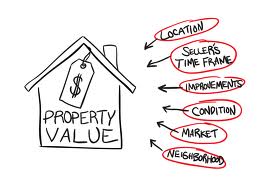 An appraisal is an objective determination of valuation of an object or property. Lenders require an appraisal before the loan is funded at closing. If a purchaser is obtaining a loan for $400,000.00 and the purchase price is $500,000.00, then the lender will not fund the loan unless the appraiser determines that the property is worth at least $500,000.00. If the property appraises for less than $500,000.00, the parties have various options.
Typically, contracts to purchase real estate contain mortgage contingency clauses, which essentially provide that if the purchaser does not obtain a commitment from an institutional lender within a certain period of time after having applied for such financing according to the contract, then the purchaser can cancel the contract and obtain the refund of his downpayment. In New York contracts, a portion of this standard loan contingency provision states that if the commitment is conditioned on the lender’s approval of an appraisal, then the purchaser is not bound until and unless the lender has approved the appraisal.
Prior to the “Great Recession”, it was not uncommon for loan officers to interact directly with appraisers by engaging their services and suggesting the amount needed for the property valuation by “prompts”. If the purchase price in the contract or the loan amount applied for in a refinancing was $350,000.00, the property must be “worth” at least $350,000.00. However, as learned in recent years, property values were inflated in some instances to justify the transactions and the homeowner was left with an “underwater” property, with the loan amount exceeding the property value. As a result, lenders reacted and became more conservative. Appraisers are now more independent and objective. A loan officer is now strictly forbidden from contacting the appraiser. Another result is that appraisers from Long Island may be evaluating properties in Westchester, making them unfamiliar with the nuances of a locality that may enhance value.